

Work/Platforms

Dumpster Brain

Dumpster Brain points cameras at commercial dumpsters and keeps sealed photo proof of every pickup, miss, and overflow. When a hauler bills for a pickup that never happened, the photos are already there.

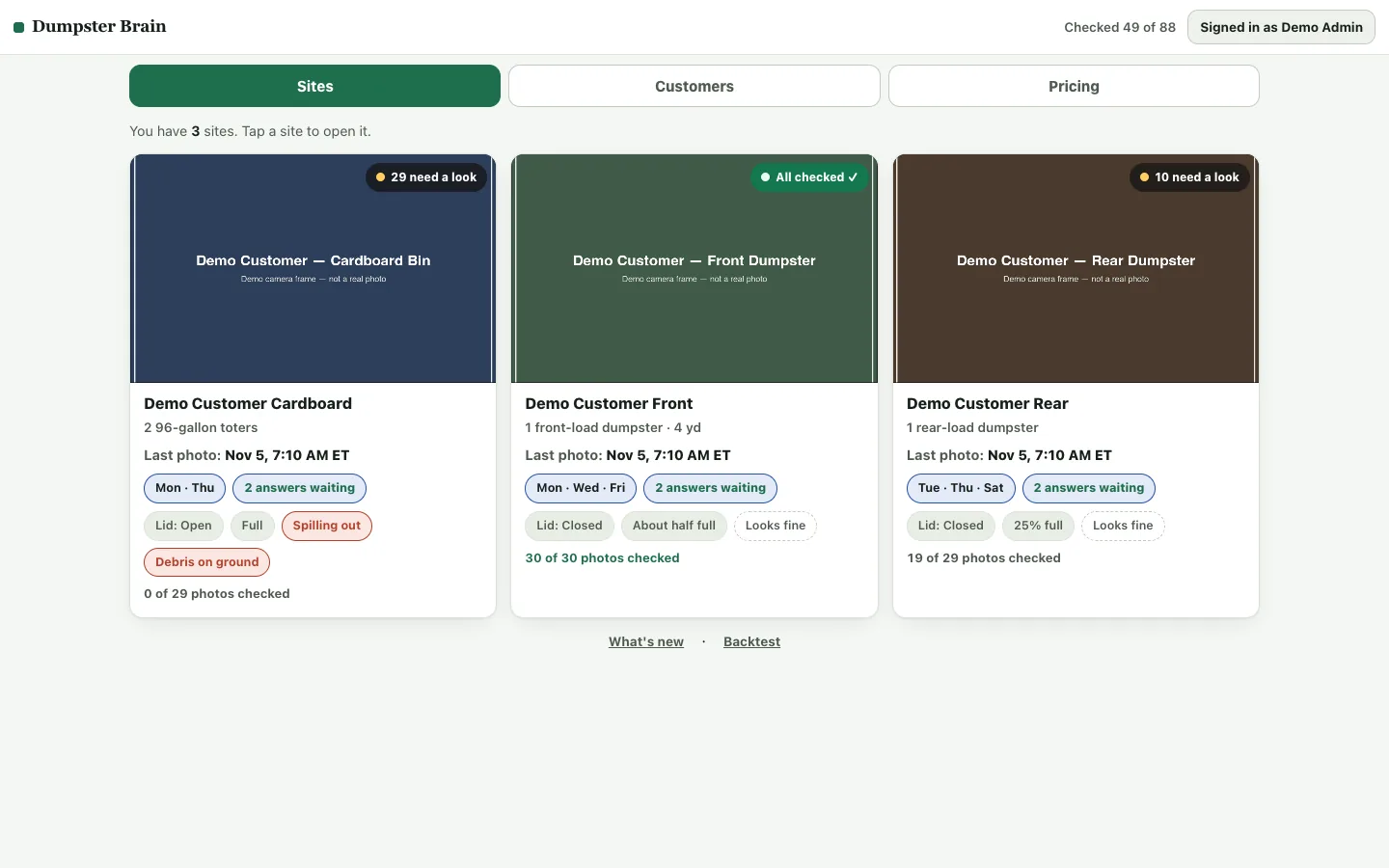
Site list: the front site marked all checked, the rear site part checked, the cardboard site untouched.
  1. 01Sites. One site is fully checked, one is part checked, one is new. Seeded readings.
  2. 02Pickups. The photo check marks each service day as dumped. A person can overrule it. Seeded marks.
  3. 03Photos. Every frame at this site is checked by a person. Seeded readings.
  4. 04One frame. The reading beside it is seeded sample data, not live model output. It says the container is empty, which is the pickup signal.
  5. 05Evidence. Each frame gets a SHA-256 hash and a place in a sealed batch. This is a local run, so the time-stamp anchors read In progress and Pending.
  6. 06Dispute. The rear site has a draft letter that asks for credit for a missed pickup. Seeded data.

Sample data

What it does

Cameras watch each dumpster and send a photo whenever something moves. The system marks each pickup and flags an overflow, a missed pickup, or a camera that has gone quiet. A person can overrule any mark.

Customers get a phone-first dashboard that speaks plainly, such as Picked up 7:38 AM, with a week of proof photos per site and a recap each week. Upload a hauler bill, and it flags the charges the photos do not support and drafts the dispute letter. Every photo is sealed with a timestamp anyone can check, so the proof does not rest on the company's word.

Hard problem we solved

Reading every frame cost too much

A camera that fires on every motion sends a lot of frames, and most of them show a dumpster doing nothing. Reading each one with a premium vision model cost too much.

So the reads are tiered. A cheap model reads every frame first, and a stronger one takes over only when the frame matters. A prompt cache cuts the repeat work, and a near-duplicate check skips a frame that looks like the last one before any model sees it. A backtest ran several models over the same frames and ranked them on accuracy, cost, and speed, and it measured what the skips missed, so the savings came with a number attached instead of a hope.

A second vision model now runs in shadow. Its answers are stored next to the live ones, and nothing depends on them until the data shows it is right. The labels a person makes in the review app are the ground truth both get graded against.

CamerasPhotos on motionCapture rigNode scriptsWorkerDashboard, API, cronVision modelsHosted, tieredKVLive frames, readingsD1Customers, bills,sealsR2Photo archiveTime stampsSigned, Bitcoin proof

Where it stands

In pilot with early customers, with a public site that shows a sample of the dashboard.

Skyburn

Tells you whether tonight's sunset is worth stepping outside for, anywhere on Earth.

Next in Platforms