
Work/Platforms

Free-loan fund software

A community free-loan fund runs end to end here, from application to payoff, and every step leaves a trail. Shown here as Shore Haven Free Loan Fund, a fictional fund.

DemoWeb

Shown as Shore Haven Free Loan Fund, a fictional fund with sample borrowers. All IDs are placeholder cards marked SAMPLE.

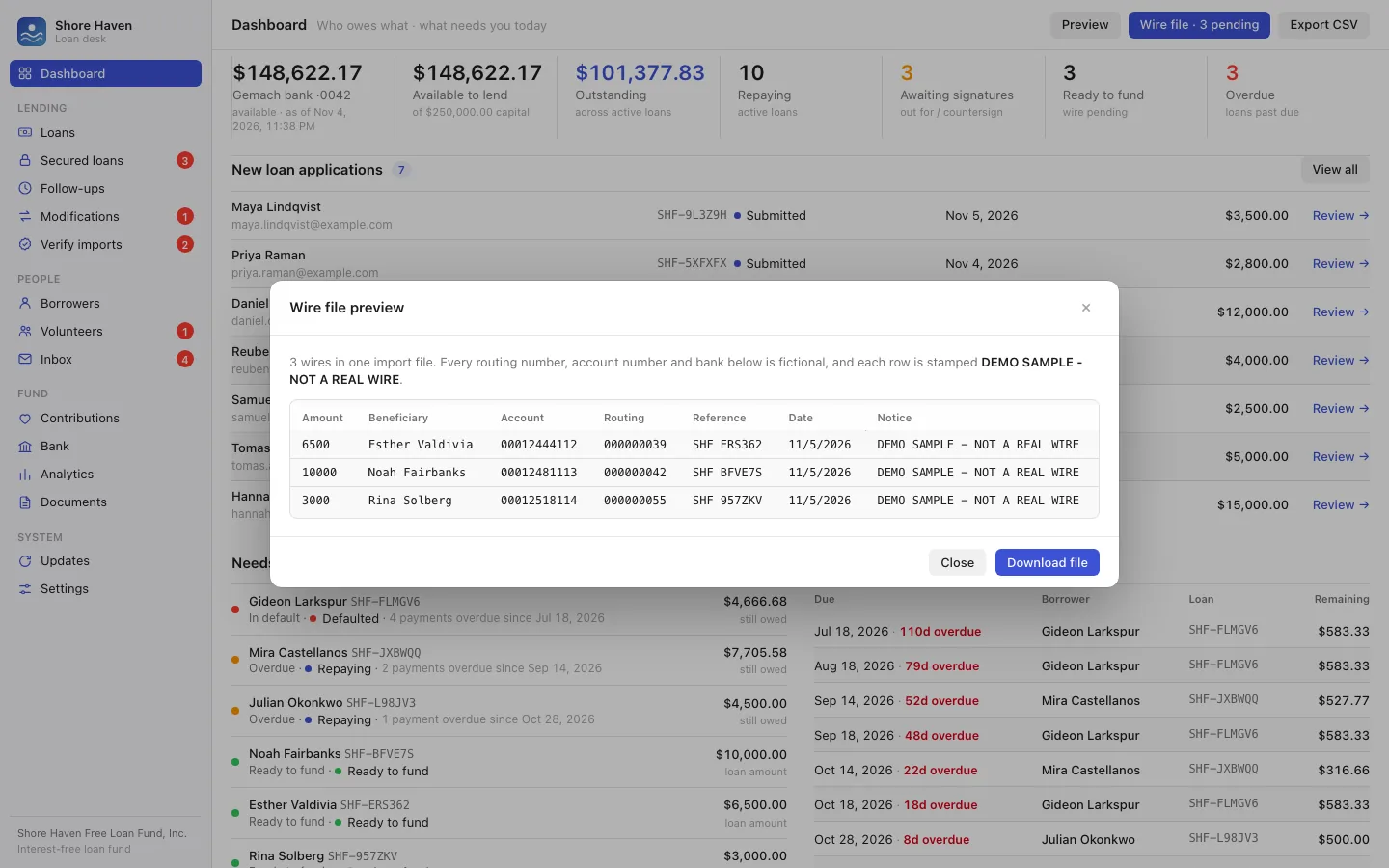
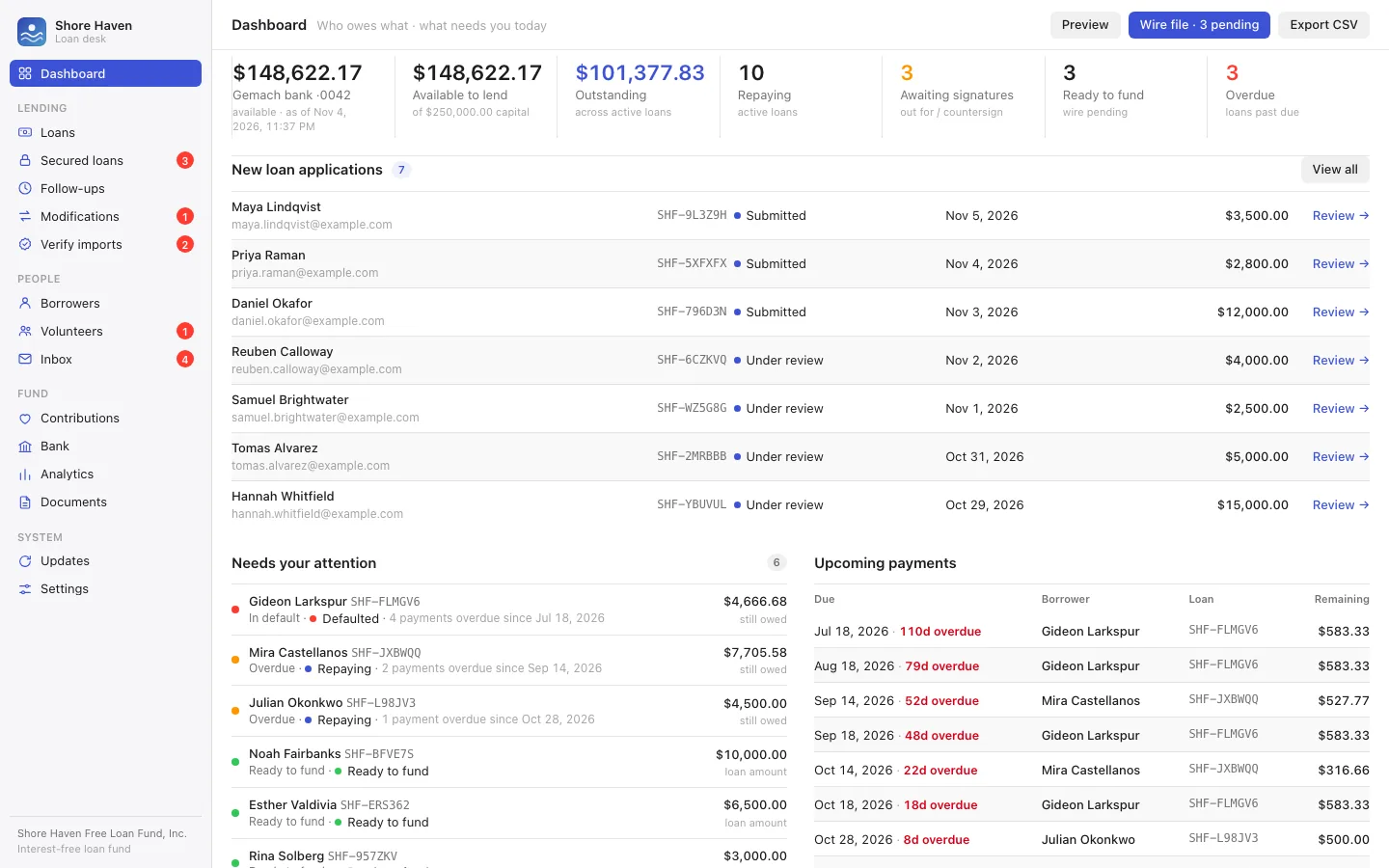
Dashboard. Cash, outstanding loans, wires pending, and new applications.
  1. 01Dashboard. Cash, outstanding loans, wires pending, and new applications.
  2. 02Loans. Every loan by status, with search.
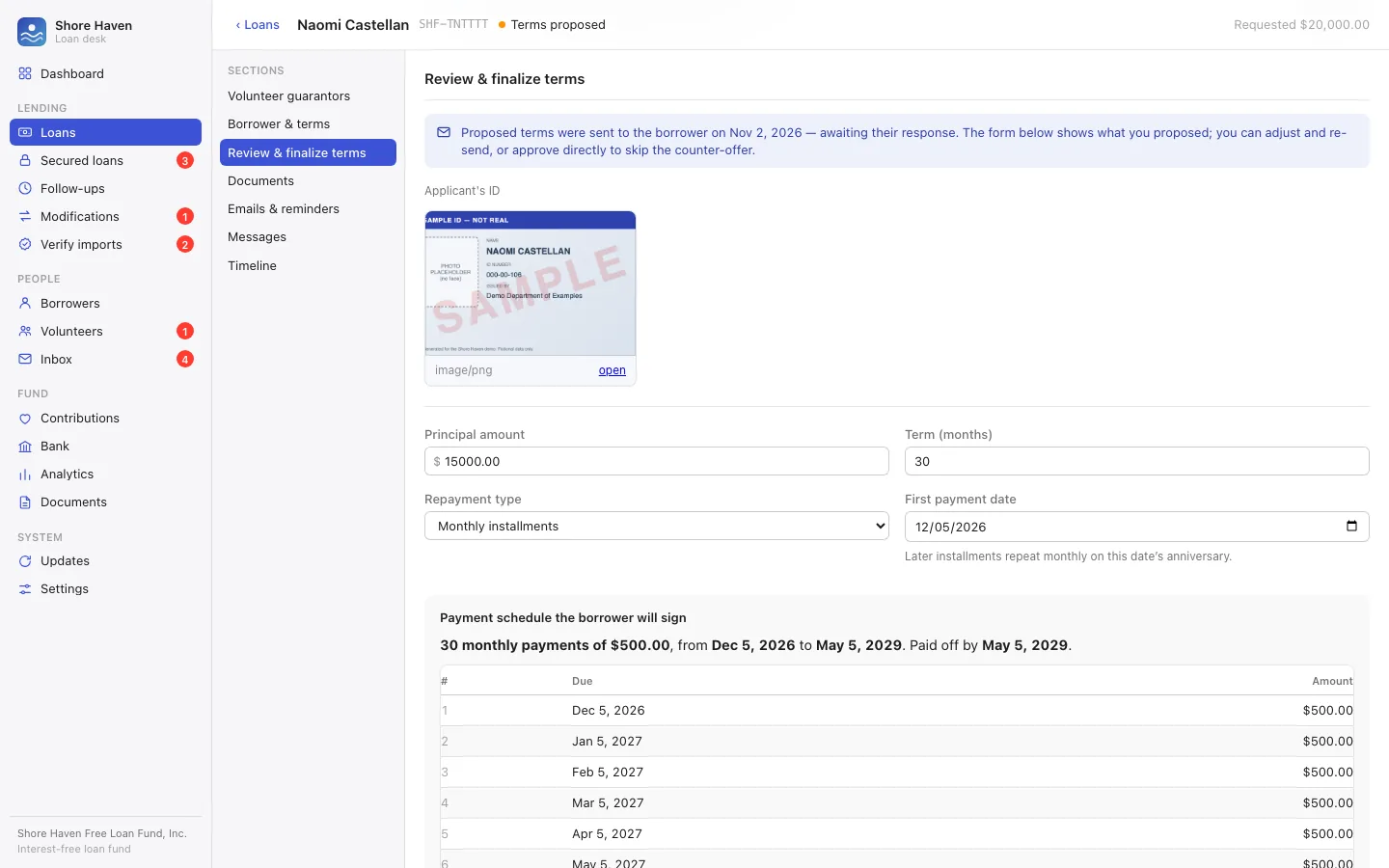
  3. 03Review. Set the terms. The payment schedule updates as you type.
  4. 04Counter-offer. The borrower sees the request and the proposal side by side.
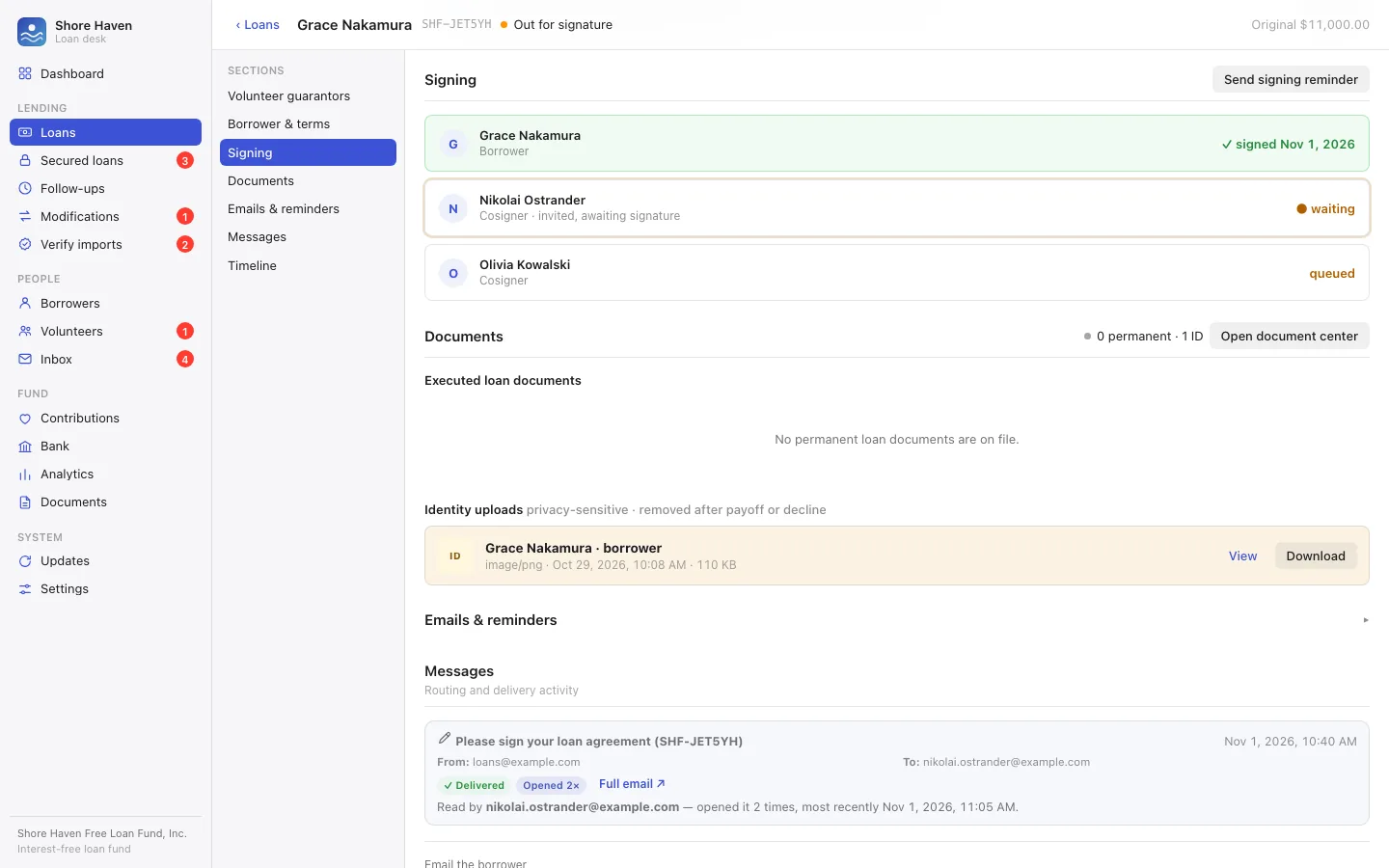
  5. 05E-signature. The borrower types a name and draws a signature.
  6. 06Ready to wire. Reveal the account, or download the wire file.
  7. 07Repayments. Record each payment, edit it, or undo it.
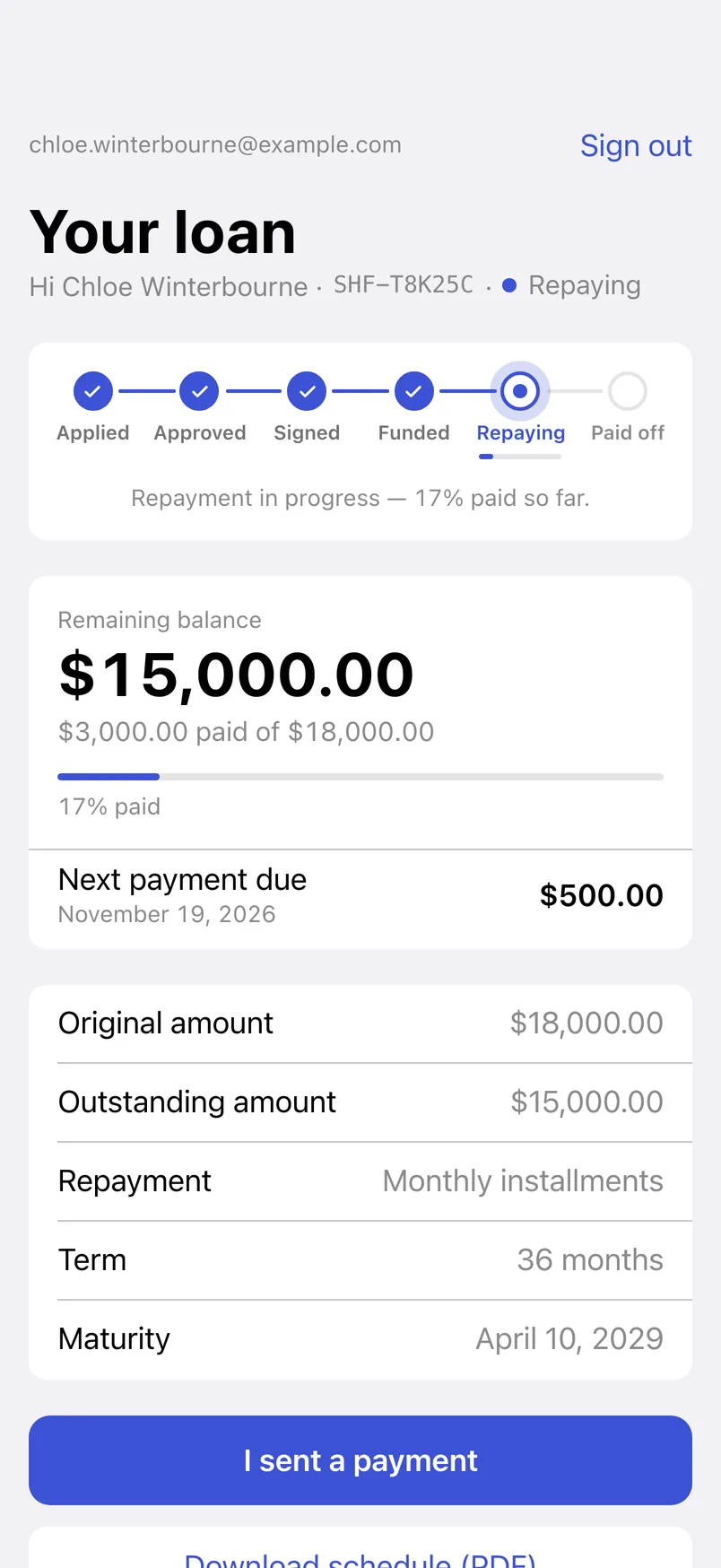
  8. 08The borrower's page. Progress, balance, and the next payment.

Sample data

Your loan. Progress from applied to paid off, the balance, and the next payment.
  1. 01Your loan. Progress from applied to paid off, the balance, and the next payment.
  2. 02Loan details. Download the schedule or a payoff statement, request a change, and see the cosigners.
  3. 03Payments. The full schedule, each payment paid or upcoming, with a calendar file to download.
  4. 04Report a payment. A sheet where the borrower tells the fund they paid. The balance updates once the fund confirms.
  5. 05Documents and help. The signed loan packet, how to pay, and a way to email support.

Sample data

What it does

A borrower applies on a public page, uploads a photo of an ID, and adds cosigners. The committee votes, counters, or asks for a change. Once a loan is approved, each signer gets a one-time signing link, borrower first, and what comes out is a signed packet that records every signing step.

After funding, the fund tracks every payment and rebuilds the schedule when anything changes. Each day it sends reminders, chases overdue loans, and flags defaults. Borrowers can check their balance or ask for a change in their own portal, and volunteers can guarantee part of a loan up to a ceiling they set.
Hard problem we solved

A signature that has to hold up later

A loan signature gets looked at again months later, usually when something has gone wrong. By then it has to be clear who signed, in what order, and that nobody has touched the packet since. A signing link a stranger could reuse, or a record that could be edited after the fact, would make the whole thing worthless.

Each signer gets a one-time link, borrower first and then each cosigner. The link is stored only as a hash in D1, so a leaked database holds nothing a person could click. Each signing step writes an event, and that chain of events is what makes the packet tamper-evident. The packet itself is a PDF built with pdf-lib and kept in R2 beside the ID photos.

After payoff, the app redacts the stored ID and bank details. Nothing reusable is kept, so the record that remains proves the loan and nothing more.

Public pagesApply, sign, portalAdmin deskReview and fundingWorkerHono, TypeScriptLoan engineSchedules, tokensD1Loans, signers, auditR2IDs, packets, backupsDaily jobReminders, backupEmail, SMS, bankSimulated in the demo

Where it stands

A demo copy runs on one machine on made-up data, about 30 invented loans with ID cards marked SAMPLE, and has no live deployment.

Gallery

Sample data. Fictional names and figures.

Dumpster Brain

Cameras watch commercial dumpsters and keep sealed photo proof of every pickup and every miss.

Next in Platforms